


Why Tree Topping Damages Grand Junction Trees
Tree care is essential for maintaining the health, safety, and beauty of our landscapes here in Grand Junction, Colorado. However, not all tree care practices are created equal. One of the most controversial and deeply harmful methods used today is tree topping...
What is Tree Topping?
Tree topping involves cutting back a tree's mature main branches to stubs or small lateral branches that aren't large enough to grow into a new, strong main leader.
Property owners often misguidedly use this drastic practice to quickly reduce the size of a large tree. While it might seem like an easy, budget-friendly fix to clear a view or get branches away from a roofline, tree topping triggers a countdown clock on internal decay and structural failure.
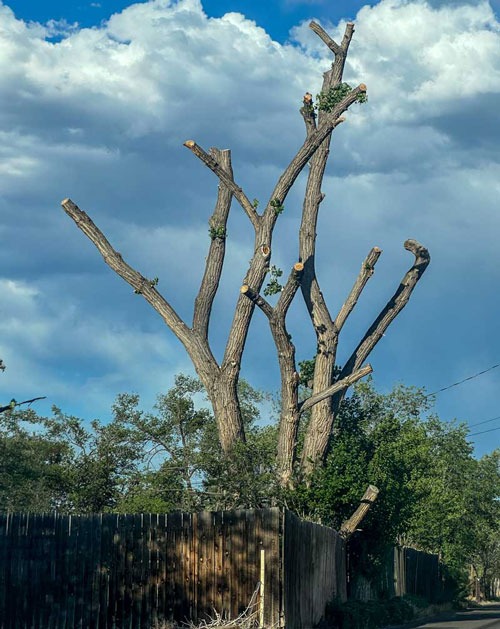
Topped Cottonwood in Grand Junction
The Impact of Tree Topping in Extreme Heat
While topping ruins trees anywhere, the negative impacts are multiplied by Grand Junction’s hot, dry, high-desert summers. Here is exactly how topping destroys your landscape assets:
1. It Starves and Weakens the Tree
Topping suddenly strips away the leaf-bearing crown, which is the tree's solar panels. Without leaves, the tree cannot perform photosynthesis. This sudden starvation shocks and severely weakens the root system, making it prime real estate for deadly diseases and pest infestations.
2. It Triggers Dangerous, Weak Growth
In a panic response to being topped, trees rapidly shoot out dozens of vertical "water sprouts" below the cuts. While they grow fast, these shoots are weakly attached to the outer bark rather than deeply anchored in the wood. This creates a dense, unruly canopy that easily breaks off during intense Grand Valley windstorms or heavy winter snow loads.
3. It Invites Deep Internal Decay
Large, flat topping cuts rarely heal. These exposed wounds leave the inner wood wide open to wood-rotting fungi and destructive boring insects. Over time, the rot eats its way down into the main limbs, creating a hollow, hazardous tree right next to your home.
4. Sunscald and Bark Scorching
In Western Colorado, our summer sun is brutal. A healthy canopy naturally shades a tree's sensitive trunk and bark. When you top a tree, you expose its interior directly to intense sunlight, causing the bark to crack, peel, and split open.
5. Massive Water Stress
Healthy canopies help maintain soil moisture underneath them. Topped trees lose their ability to efficiently conserve and draw up water, leaving them highly vulnerable to the severe drought conditions common to Mesa County.
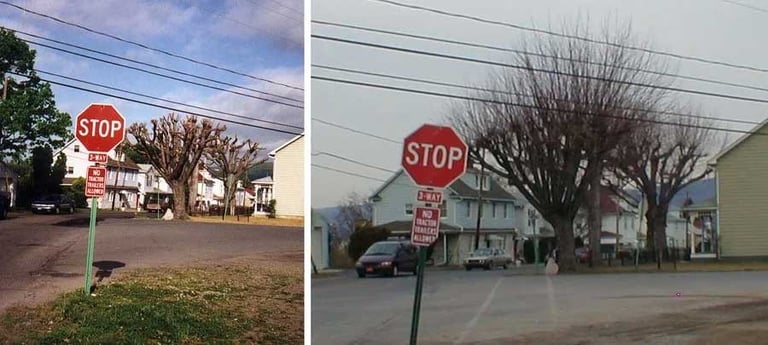
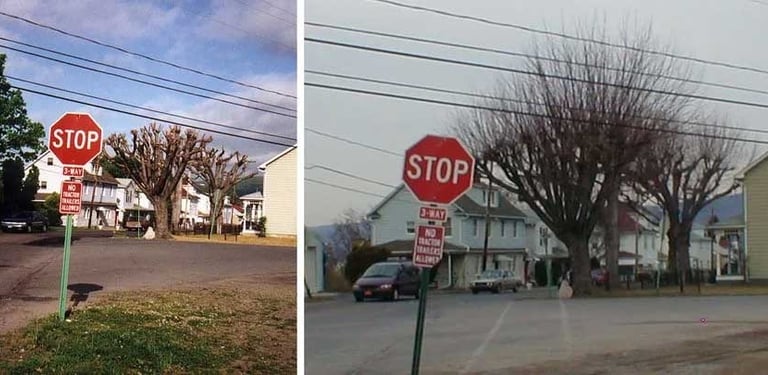
©The Pennsylvania State University
Legal and Financial Risks in Grand Junction
The consequences of tree topping go beyond just plant biology—it can hit your wallet. Topped trees require constant, expensive maintenance to manage the unstable sucker growth. Even worse, the weakened structure creates a high risk of branch failure that can drop limbs onto roofs, cars, or power lines.
Furthermore, many municipal regulations and HOA guidelines protect local urban canopies. Unlicensed operators who perform destructive tree topping put property owners at risk and face potential code violations, fines, and severe drops in property value.
3 Safe Alternatives to Tree Topping
You don’t have to ruin a tree to manage its height or clear a hazard. Certified arborists use scientifically backed techniques to get the results you want safely:
Structural Pruning (Building a Strong Foundation): Think of this like braces for a young tree. We guide its early growth to encourage one strong central trunk and remove competing branches that form dangerous, weak angles. This simple step prevents the tree from splitting down the middle when it matures.
Crown Reduction (Safe Downsizing): Think of this as a professional haircut. Instead of cutting straight across, we selectively trim back the longest, heaviest branches to natural, lower joints. This safely lowers the tree's height and weight while keeping its beautiful, natural shape.
Crown Cleaning (The Safety Tune-Up): Think of this as cleaning out a messy closet. We go inside the canopy to remove dead wood, diseased limbs, and branches rubbing against each other. It keeps the tree exactly the same size but stops hazardous limbs from falling on your house or car.
Work with a Certified Grand Junction Arborist
At Cambium Tree Solutions, we are deeply committed to providing sustainable, safe tree care across Grand Junction, Fruita, and Palisade. We understand the specifics challenges for our local trees.
If you have a tree that has over grown, is leaning dangerously, or needs professional assessment, don't chop it in half. Let a certified professional inspect it safely,
Professional Disclaimer & Safety Notice
The information provided on this blog is for general educational purposes only. Tree care—especially involving large canopies, technical climbing, and heavy equipment—is inherently hazardous. While we strive to provide accurate advice, any reliance you place on this information is strictly at your own risk. Cambium Tree Solutions, LLC will not be liable for any damage or injury resulting from DIY tree work attempts. For your safety and the health of your landscape, always consult and hire an ISA Certified Arborist for your specific circumstances.
Need professional help with your trees? Click here to contact our certified team today.
We are proud to be in compliance with legislation and industry best practices.
Telemarketers: Do not call for unsolicited services.
© 2026 Cambium Tree Solutions LLC.
All rights reserved.

Service Area
Grand Junction, CO
Palisade, CO
Fruita, CO